The setting is the product
Furniture that draws attention to itself works against the reason people came. The specification tends toward materials that read as natural and weather into the landscape rather than standing out against it.
Specifying for wineries & cellar doors
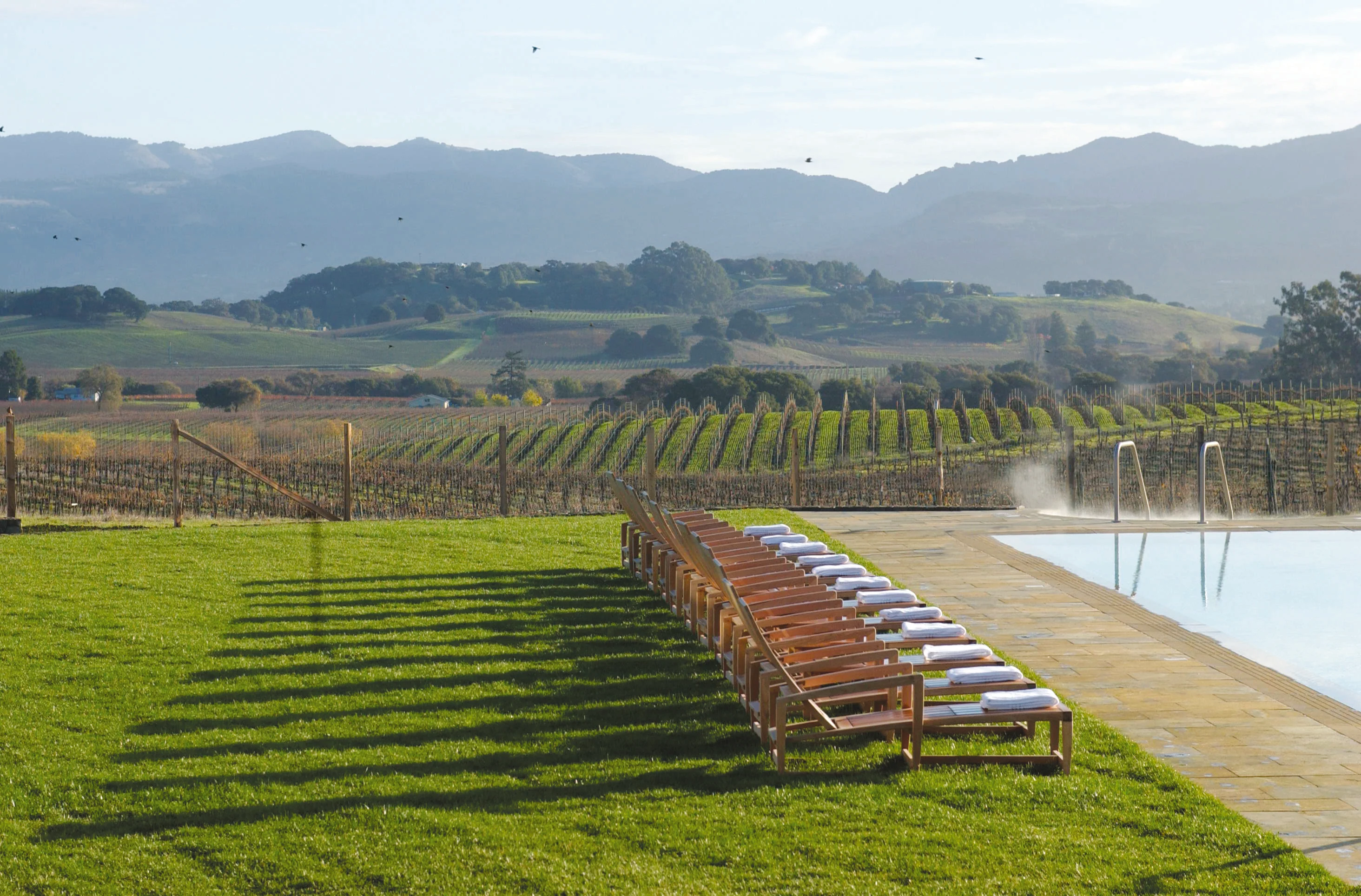
A cellar door sells the setting as much as the wine, so its furniture has an unusual brief: it must not compete with the view, it must hold a table of people for three hours comfortably, and it lives outdoors through a full inland weather range with nothing sheltering it.
Who signs this off: A cellar-door manager or the owner, usually alongside a hospitality fit-out.
The specification problem
Each of these is a reason furniture that works elsewhere fails here. They are the questions worth settling before a range is chosen, not after.
Furniture that draws attention to itself works against the reason people came. The specification tends toward materials that read as natural and weather into the landscape rather than standing out against it.
Hard frost, hail and 40-degree afternoons in the same twelve months is a wider range than most coastal sites see, and it is hard on finishes and on anything that holds water.
A long lunch is a comfort specification. Seat depth, back angle and whether a chair is bearable without a cushion matter far more here than in a venue built on turnover.
What answers it
Every line below goes to a page that carries the detail rather than repeating a summary of it here.
Left unoiled, teak silvers to a soft grey that sits with vines and stone rather than against them — the one common outdoor material that arguably looks better after a few seasons.
Kingsley Bate teakDining tables filtered by size and seat count, which is how a cellar door plans a lawn.
Dining tablesA lawn with no building to break the wind is the hardest shade case there is; the shade ranges are listed with their wind ratings.
Umbrellas and shadeOutdoor fabric from the ranges, in stock fabrics, or the venue’s own material.
Cushions and fabricAsked and answered
Answered as they would be over the phone — what to specify and why, without a piece being sold in the answer.
Timber, generally — it reads as part of the setting rather than against it, and teak in particular weathers to a grey that suits vines and stone. Where the lawn has to clear for events, pair it with a stacking range in a matching tone rather than trying to make one piece do both jobs.
Timber and quality powder-coated aluminium both handle that range; the components that suffer are fabrics under UV and anything that traps water and then freezes. Specify drainage-friendly seats, treat cushions as removable and re-coverable, and the annual range stops being the deciding factor.
Free-standing shade with a base heavy enough for the site’s actual wind exposure, specified against the maker’s published rating rather than by appearance. On a fully open lawn this usually means a heavier base than expected, and it is worth resolving before the layout is fixed rather than after.
Custom & Contract
Areas with different exposures want different answers, and specifying them separately is how a property ends up with three timbers that do not match. File the brief as one project and the conversation starts at material and schedule.
The specification advice on this page is general — it describes how Casualife approaches wineries & cellar doors, not work done at any particular venue. Where a venue is named above, it is named because the company’s own records name it; every Australian reference the company publishes is listed under Projects. Casualife distributes these houses in Australia and does not manufacture them.